In Türkiye, only a contractor holding a Y1-class demolition contractor licence may undertake demolition with explosives; Y2 and Y3 contractors may not take on demolitions that use explosives. Yet the licence is only the first condition. The key to the permit is the demolition plan: the document that shows by which technique, and with which safety and environmental measures, the structure will be demolished.
The competent authority (the municipality within municipal and adjacent-area boundaries, the special provincial administration outside them, and other administrations authorised to issue building permits under the relevant legislation) reviews the plan. If it finds omissions or errors, no demolition permit is issued and the omissions are notified in writing. In this article we explain, on the basis of the regulations in force, where and why a demolition plan file is found incomplete or incorrect, and what should be checked before submission.
What You Will Learn
- Who prepares what in an explosive demolition file
- The authority’s review periods: 15, 10 and 5 days
- The difference between a notice of omissions, cancellation, nullity and suspension
- 16 items that may be deemed incomplete or incorrect in a demolition plan, with their legal basis
- How the changes taking effect on 12 August 2027 affect the file
The Regulation lists the content of the demolition plan item by item in Annex 2, and the content of the acoustic report required for demolition by blasting in Annex 3. Because the items the authority looks for are known, omissions can be caught before submission with a checklist. You will find a 16-item checklist of this kind below.
Who is in the file, and who prepares what?
An explosive demolition file is not a one-person job. The Regulation ties each document to a separate qualification. If a document was prepared by someone without that qualification, the file may be deemed incomplete even if the content is correct.
| Role | Task in the file | Legal basis |
|---|---|---|
| Contractor (Y1 class) | Undertakes the demolition; has the demolition plan prepared by the plan author; attaches the documents on the transport and use of explosives to the application. | Contractors Reg. Art. 14/A(5); RDB Art. 5(4), 6(1), 7(3) |
| Plan author (civil engineer) | Prepares the demolition plan in line with TS 13633 and Annex 2. Where damage to neighbouring structures, the ground or infrastructure is possible, also prepares a condition survey report. | RDB Art. 4(1)(d), 6(2), 6(4) |
| Technical supervisor (civil engineer) | Mandatory in explosive demolition regardless of building height; supervises compliance of the demolition with the permit and the plan. | RDB Art. 5(3), 9(2) |
| Engineer preparing the blasting report | Civil, mining, environmental, geological or geophysical engineer holding a master’s degree or a university certificate programme in blasting techniques and applications. Prepares the report containing the blasting method and plan, and accompanies the work. | RDB Art. 6(2) |
| Acoustic report specialist | A person with the expertise specified in the environmental noise legislation. Diploma, demolition and blasting training records and certificates are attached to the report. | RDB Art. 17(2) |
| Environmental officer / environmental engineer | Holder of an environmental management service competency certificate. Prepares the waste management plan and the dust emission measures. | RDB Art. 6(2), 18(1) |
| Site manager | Employed by the contractor. | RDB Art. 5(5) |
RDB: Regulation on the Demolition of Buildings. Paragraph numbers follow the consolidated text on mevzuat.gov.tr. Technical supervisor (fenni mesul): the engineer who supervises that the demolition is carried out in line with the permit and the demolition plan. TS 13633: Turkish standard, Rules of practice for full and partial demolition of structures.
How the authority reviews the plan: 15, 10 and 5 days
The building owner or their legal representative submits the title deed, the contracts, the demolition plan and the other attachments to the competent authority with the application (Art. 7(2)). In explosive demolition, the contractor attaches the documents on the transport and use of explosives (Art. 7(3)). The authority then reviews the demolition plan:
- If there are no omissions or errors, the demolition permit is issued within 15 days at the latest from the application date.
- If there are omissions or errors, they are notified in writing within 10 days from the application date.
- Once the omissions are remedied, the permit is issued within 5 days at the latest from the new application (Art. 7(5)).
The Regulation sets no deadline for corrections; the time between notification and resubmission depends on how quickly you correct the file. Each notice of omissions also adds a waiting period to the schedule: first you wait for the notification, then for the second review.
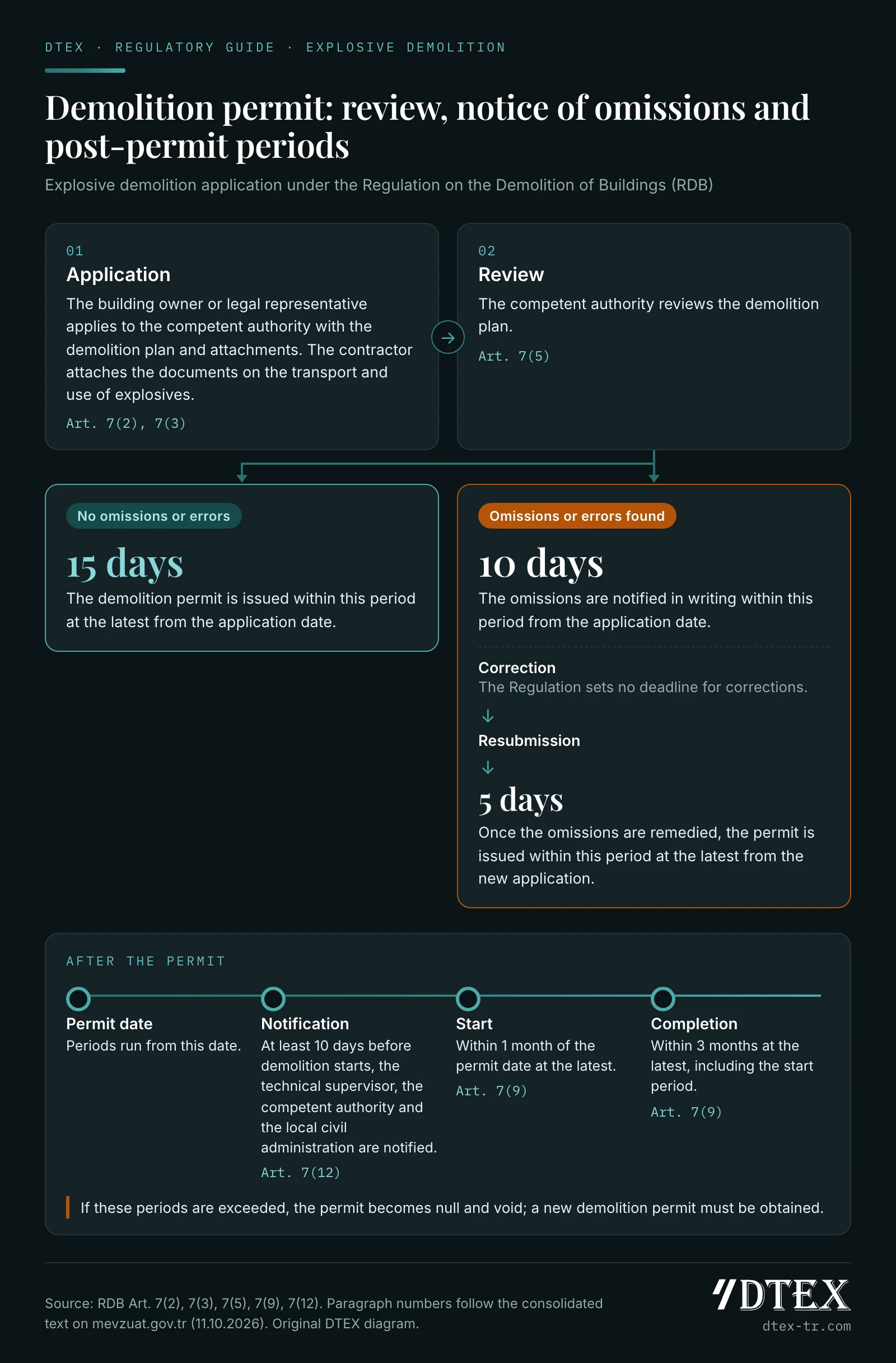
Figure 1 — Review and notice-of-omissions cycle of a demolition permit application, and post-permit periods. Source: RDB Art. 7(2), 7(3), 7(5), 7(9), 7(12). Original DTEX diagram.
In explosive demolition, the contractor notifies the technical supervisor, the competent authority and the local civil administration (governorship or district governorship) at least 10 days before the demolition starts (Art. 7(12)). The competent authority informs the public at and around the site starting 7 days in advance (Art. 9(3)). As in every demolition, buildings on neighbouring plots are notified at least 3 days in advance (Art. 9(4)).
What does “the plan was cancelled” mean? Four different outcomes
On site people say “the plan was cancelled”; the Regulation and its annexes, however, provide for four different outcomes. Knowing which one you face determines how much time you will lose and what you need to fix.
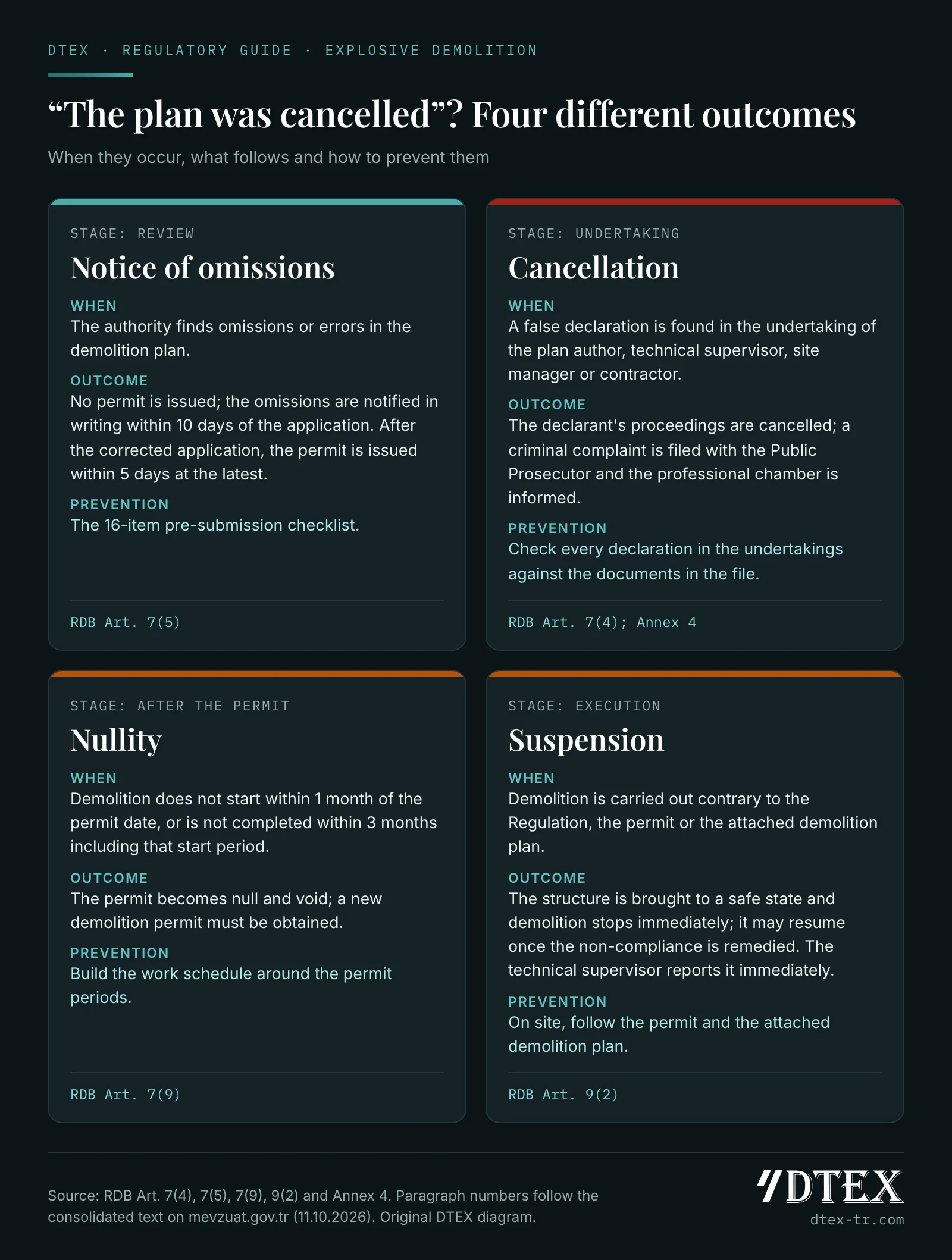
Figure 2 — Notice of omissions, cancellation, nullity and suspension: when they occur, what follows and how to prevent them. Source: RDB Art. 7(4), 7(5), 7(9), 9(2) and Annex 4. Original DTEX diagram.
- Notice of omissions. A plan found incomplete or incorrect at review does not become a permit; the omissions are notified in writing (Art. 7(5)). This is the outcome a pre-submission check can prevent.
- Cancellation. The plan author, technical supervisor, site manager and contractor each submit an undertaking to the competent authority (Art. 7(4), Annex 4). The undertakings carry an explicit warning: the proceedings of anyone found to have made a false declaration are cancelled, a criminal complaint is filed with the Public Prosecutor, and the professional chamber is informed (in the contractor’s undertaking, the professional chamber and the Ministry are informed if the contractor holds an architect or engineer title).
- Nullity. If demolition does not start within one month of the permit date, or is not completed within three months including that start period, the permit becomes null and void, and a new demolition permit must be obtained (Art. 7(9)).
- Suspension. If the demolition is found to be carried out contrary to the Regulation, the permit or the attached demolition plan, the structure is brought to a safe state and the demolition is stopped immediately; it may resume once the authority confirms the non-compliance has been remedied. The technical supervisor must report any non-compliance to the authority immediately (Art. 9(2)).
16 items that may be deemed incomplete or incorrect in a demolition plan
The list below is compiled from the documents and content required by Articles 4–9, 12 and 16–18 of the Regulation and by Annexes 2, 3 and 4. Each row is an item the authority may treat as “incomplete” or “incorrect”. The list follows the annexes in force today; the annexes will be replaced on 12.08.2027.
A. Licence and staffing
| # | Omission | Legal basis |
|---|---|---|
| 1 | The contractor’s licence is not Y1 class. | Contractors Reg. Art. 14/A(5); RDB Art. 5(4) |
| 2 | The plan author is not a civil engineer, or the plan author’s undertaking (Form 2) is missing. | RDB Art. 4(1)(d), 6(1), 7(4); Annex 4 |
| 3 | The technical supervisor’s contract or undertaking (Form 3) is missing. | RDB Art. 5(3), 7(2), 7(4); Annex 4 |
| 4 | The master’s degree or certificate of the engineer who prepared the blasting method report is not in the file. | RDB Art. 6(2) |
B. Content of the demolition plan (Annex 2)
| # | Omission | Legal basis |
|---|---|---|
| 5 | Building data incomplete: sketch, location, photograph, satellite image, use, total floor area, number of storeys including basements, quantity and type of material to be generated. | Annex 2/1(a) |
| 6 | No architectural or structural drawings; where they cannot be obtained, no as-built survey (measured drawings of the existing structure) has been prepared. | RDB Art. 6(5); Annex 2/1(b) |
| 7 | No vicinity plan showing the relationship with roads, retaining structures, infrastructure and neighbouring buildings. | Annex 2/1(c) |
| 8 | Demolition technique and sequence described only in general terms; no work schedule. | Annex 2/2(a), 2(b) |
| 9 | Incomplete information and documents on the number, qualifications and duties of personnel, and on machines, attachments and operators. | RDB Art. 12(2); Annex 2/2(c), 2(ç) |
| 10 | No assessment of effects and risks on retaining structures and adjoining buildings; no condition survey report although damage to a neighbouring structure is possible. | RDB Art. 6(4); Annex 2/2(d) |
| 11 | Safety measures not specific to blasting: risk assessment, covering of charged floors against air overpressure and fragment projection, traffic and emergency response measures. | RDB Art. 8(2), 9(5); Annex 2/2(e), 2(f) |
C. Blasting and the acoustic report (Annex 3)
| # | Omission | Legal basis |
|---|---|---|
| 12 | The acoustic report does not follow the Annex 3 format, or the author’s expertise and training documents are not attached. | RDB Art. 17(2); Annex 2/3(c); Annex 3 |
| 13 | No calculation of ground vibration, air overpressure and flyrock, or of the effect of vibration on the nearest settlement. | Annex 3/B.2 |
| 14 | Blast design lacking detail: number of holes, charge quantity, blasting period, explosive and detonator quantities per hole and per blast, blasting model to be applied; measures before and after the blast. | Annex 3/B.2, C |
D. Environment and application attachments
| # | Omission | Legal basis |
|---|---|---|
| 15 | Waste management plan, asbestos inventory report or the strip-out plan including selective demolition missing; dust emission measures not determined by an environmental officer. | RDB Art. 5(7), 16(1), 18(1); Annex 2/3(a), 3(b) |
| 16 | Application attachments missing: title deed, contracts, owners’ consents, evacuation document, disconnection documents for electricity, water, natural gas and telephone, and the documents on the transport and use of explosives. | RDB Art. 7(2), 7(3) |
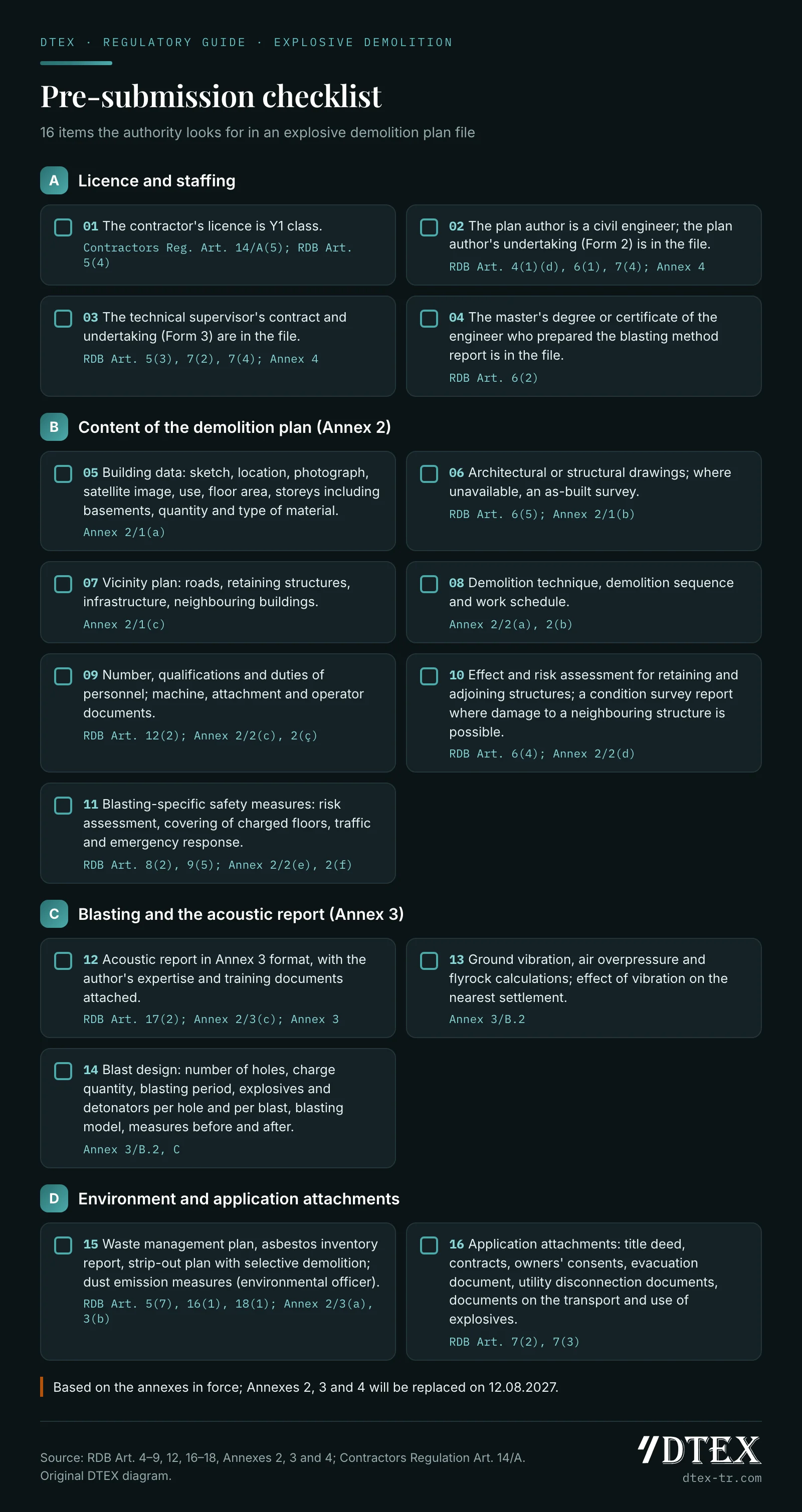
Figure 3 — Pre-submission checklist. Source: RDB Art. 4–9, 12, 16–18, Annexes 2, 3 and 4; Contractors Regulation Art. 14/A. Original DTEX diagram.
What will change on 12 August 2027?
The Regulation on the Demolition of Buildings was amended in the Official Gazette of 12.08.2026. Most of the amendment takes effect one year after publication, on 12 August 2027 (Art. 14 of the amending regulation). Applications made today are subject to the rules above. After that date, for demolitions with explosives:
- The demolition plan will be prepared according to Annex 5; all demolitions with explosives will be carried out under the provisions on the explosive demolition of high-rise buildings (Art. 5(4), 6(2)).
- In addition to the technical supervisor, an engineer responsible for blasting and a blaster will be appointed (Art. 5(3)). The engineer responsible for blasting must be a civil, mining, environmental, geological or geophysical engineer holding a certificate on the use of explosives issued by institutions authorised by the Ministry, or at least a thesis-based master’s degree in demolition with explosives (Art. 4(1)(h)). The blaster must hold a (B) class competency certificate (Art. 13/B(2)).
- The plan author is defined as a civil engineer meeting the requirements for structural design authorship (Art. 4(1)(ğ)). The engineer responsible for blasting and the plan author will be present on site together and will be responsible for the analyses and reports within their respective duties (Art. 5(4), 6(3)).
- Information and documents on the engineer responsible for blasting will be attached to the application, and an undertaking will also be taken from this engineer (Art. 7(3), 7(4)).
- No blast may be fired without assessing meteorological conditions. Calibrated vibration and pressure sensors will be used at the moment of blasting, and the demolition will be recorded with high-speed cameras. If a test blast is required, Form 8 in Annex 6 must be completed (Art. 13/B(3)–(5)).
- For adjoining buildings, high-rise buildings and site conditions that hinder machine demolition, or in cases of force majeure, the permit period may be extended once by up to three months at the contractor’s request, if the authority approves (Art. 7(9)).
- The separate blasting method report provision in Art. 6(2), and the requirement that the person who prepared it accompany the work, will be repealed (Art. 4 of the amending regulation). Blasting competence will be required through the engineer responsible for blasting (Art. 4(1)(h), 13/B(1)).
- Annexes 2, 3 and 4 of the Regulation will be replaced (Art. 13 of the amending regulation). The checklist in this article follows the annexes in force today; after 12.08.2027 it must be updated to the new annexes.
- Permit procedures for buildings for which a public body took a tender decision or set a tender date, or held the tender, before that date but for which no demolition permit has yet been issued, will be concluded under the previous provisions (Provisional Art. 2).
In demolitions carried out by public institutions and organisations under Law No. 6306, no contractor or site manager is required; in that case, these institutions assume all technical responsibility for every demolition that requires a demolition plan (Art. 7(8); in force since 12.08.2026).
We covered the details of the amendment and preparation for the transition period in our article on the explosive demolition amendment to the Regulation on the Demolition of Buildings.
How DTEX can help
DTEX carries out a pre-submission file review for contractors undertaking demolition with explosives: we check the demolition plan and its attachments against this checklist and report omissions and inconsistencies between reports together with the provision they rest on. Within our explosive demolition services we also provide blast design and the blasting method report, vibration monitoring, applications for explosives purchase and use permits, and explosives supply. If you do not have a Y1 contractor, we work as one team with our Y1-licensed partner and our engineer responsible for blasting.
Have your demolition plan checked before submission
Send us your file; we will report the omissions and the provisions they rest on.
Contact us →Frequently Asked Questions
Can a Y2-class contractor carry out demolition with explosives?
No. Y2 and Y3 contractors may not undertake demolitions that use explosives; this work is open only to the Y1 class (Contractors Regulation Art. 14/A(5)).
How long does the authority take to review a demolition plan?
If there are no omissions or errors, the permit is issued within 15 days at the latest from the application. If there are, they are notified in writing within 10 days; after the corrected application, the permit is issued within 5 days at the latest (RDB Art. 7(5)).
Who may prepare the blasting method report?
Until 12.08.2027: civil, mining, environmental, geological and geophysical engineers holding a master’s degree or a university certificate programme in blasting techniques and applications. This person accompanies the explosive demolition work (RDB Art. 6(2)).
Is an acoustic report required for every demolition?
No. The acoustic report is limited to demolition carried out by blasting and is attached to the demolition plan (RDB Art. 17(2)).
Does the amendment of 12.08.2026 apply today?
Mostly not; it takes effect on 12.08.2027. The provision that took effect on publication concerns demolitions carried out by public institutions and organisations under Law No. 6306 (RDB Art. 7(8)).
This content is for general information only; it is not legal advice and is not a design for any demolition, blasting or engineering application. Work with explosives and blasting must be carried out by experts authorised under the relevant legislation, with site-specific calculations and reports. Legal provisions may change; before each application, the current text in force as published in the Official Gazette and the practice of the competent authority must be taken as the basis. DTEX Savunma Madencilik cannot be held liable for consequences arising from the use of this content by third parties.
📚 Sources (accessed 11 October 2026)
- Regulation on the Demolition of Buildings (Binaların Yıkılması Hakkında Yönetmelik) — Official Gazette 13.10.2021, No. 31627; amended: OG 21.12.2022, No. 32050 and OG 12.08.2026, No. 33338. Consolidated text and annexes: mevzuat.gov.tr
- Regulation Amending the Regulation on the Demolition of Buildings — Official Gazette 12.08.2026, No. 33338; under Art. 14, most provisions take effect on 12.08.2027. resmigazete.gov.tr
- Regulation on the Classification and Registration of Building Contractors (Yapı Müteahhitlerinin Sınıflandırılması ve Kayıtlarının Tutulması Hakkında Yönetmelik) — OG 02.03.2019, No. 30702; Art. 14/A (added: OG 05.08.2021, No. 31559). mevzuat.gov.tr
- TS 13633 — Rules of practice for full and partial demolition of structures.