
Controlled Demolition
With AEM Controlled Collapse
In collapse analysis we use the Applied Element Method (AEM) . Unlike classical methods that assume continuity, AEM models the structure as connected and separable elements — thereby simulating cracking, rupture and collapse motion with maximum realism. This is the critical advantage for controlled demolition: we see in advance how the structure fragments and where it descends. We run all analyses with our proprietary DTEX software.
True Separation
Modelling element rupture and detachment.
Collapse Motion
Predicting the descent direction and sequence of the structure.
Field Validation
Calibrating results against field data.
The Collapse Tetikleyen Design
Which element is weakened, with how much explosive, and in what sequence — this is an engineering design.
Column Weakening
Determining the column and shear-wall cutting points and sequence that will trigger the controlled collapse.
Explosive Quantity
Engineering calculation of the charge required at each point.
Delay & Progressive Collapse
Managing collapse sequence and direction with millisecond delays.
Calculation details (explosive quantity, delay plan, collapse scenario) members-only Engineering Tools; this page stays at the level of method and outputs.
Site & Project Gallery
From our explosive controlled demolition projects

Pre-Demolition Preparation
Preparing urban-renewal structures for controlled demolition.
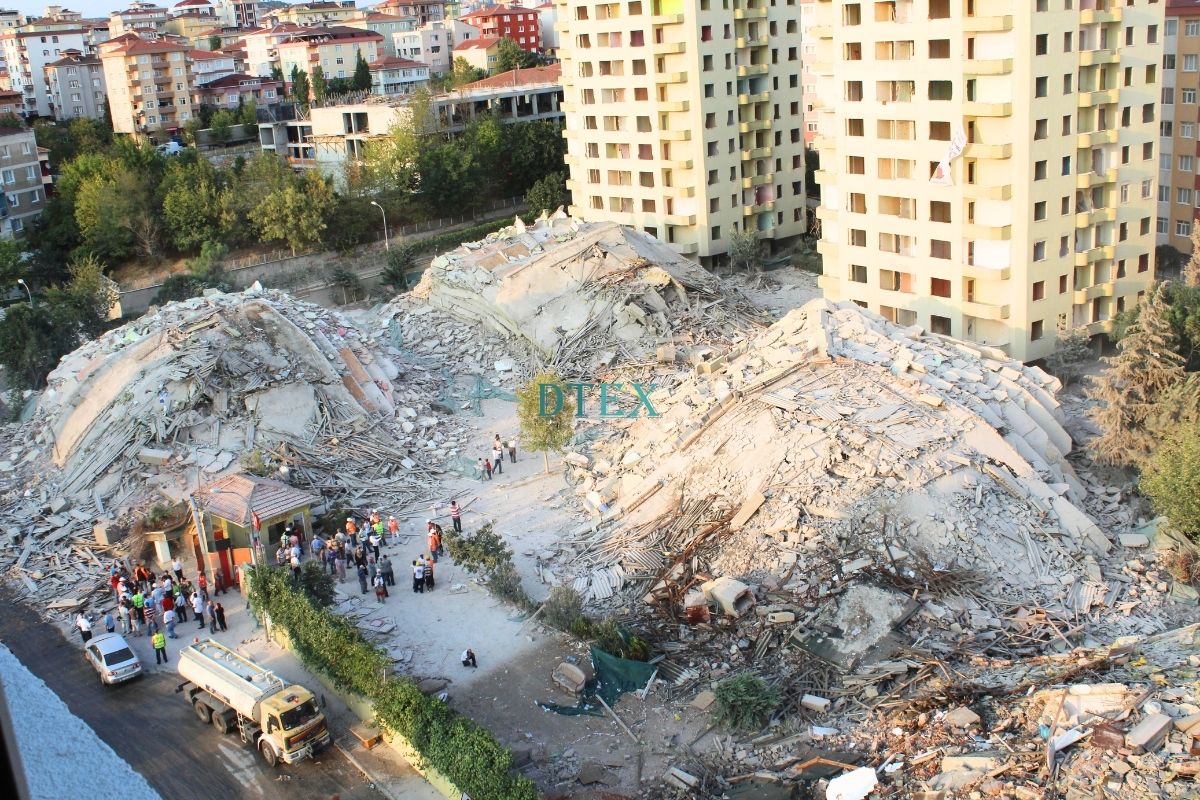
Post-Demolition Site
Structure brought down in the intended direction; loadable, separable debris.

Industrial Stack Demolition
Directional demolition of tall stack structures.
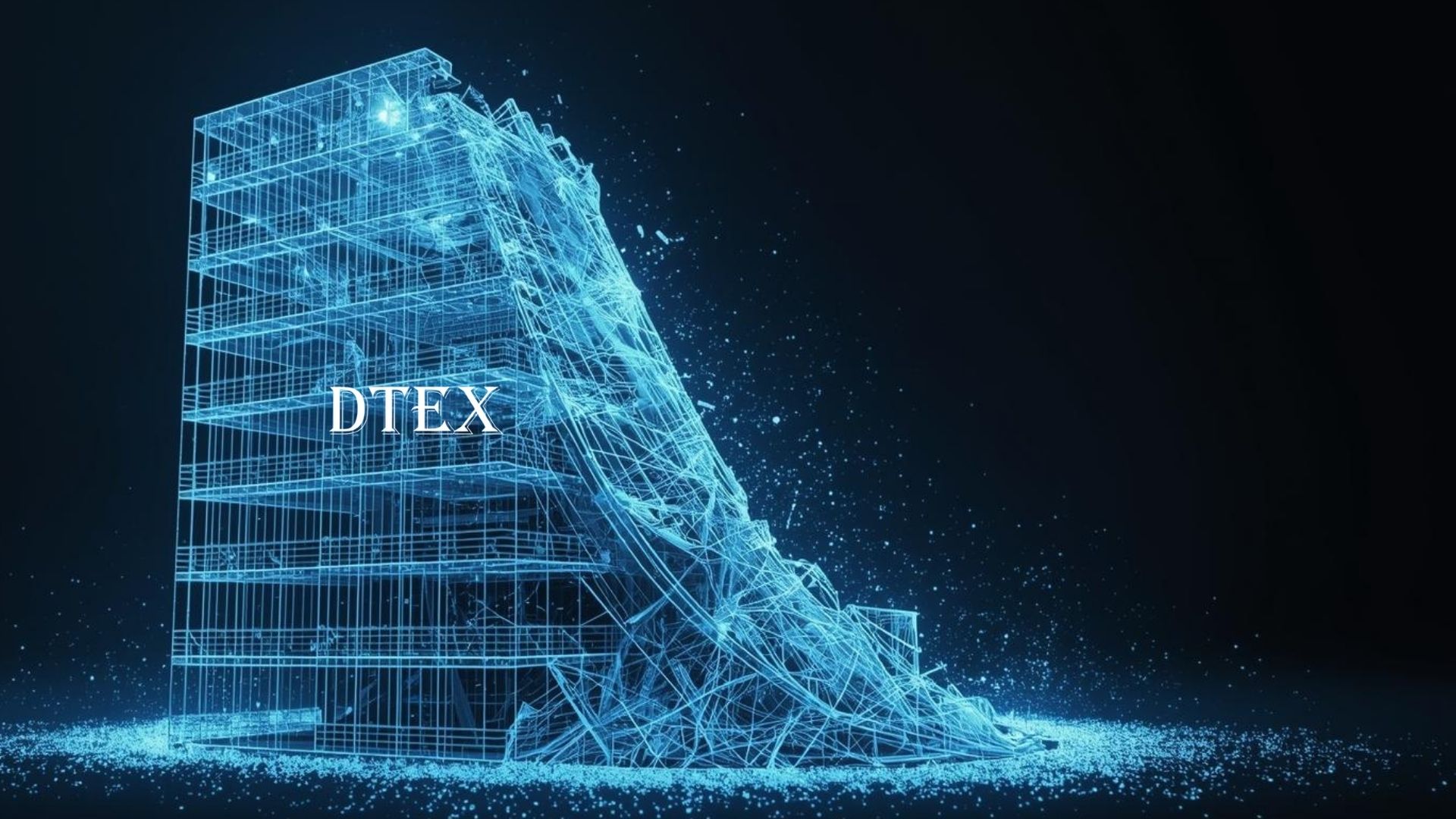
Failure Simulation
Demolition direction analysis with a 3D digital twin.
Explosives-Based Controlled Demolition
We bring down massive and damaged structures exactly in the intended direction, with a science-based collapse scenario — debris loadable and separable, the whole project handled from A to Z by a single team.
An Engineered Collapse
Controlled demolition is the engineering discipline of producing a pre-calculated collapse scenario using explosives placed at strategic points in a structure's load-bearing system. Commonly known as "implosion" is in fact a controlled progressive collapse: the structure descends under its own weight, in the direction and sequence designed by the engineers.
Urban Renewal
Fast, safe removal of ageing, at-risk structures.
Earthquake-Damaged Structures
Controlled demolition of high-risk buildings that have lost their integrity.
Industrial & High-Rise
Precision collapse of stacks, silos, towers and tall buildings.
Method & Directional Demolition
We select the safest collapse strategy based on site geometry and adjacent structures.
Implosion (Inward Collapse)
Collapsing the structure inward onto its own footprint in confined areas, without harming the surroundings.
Felling (Directional Toppling)
Toppling the structure in a chosen direction where sufficient open space exists.
Exactly in the Intended Direction
We steer the collapse precisely toward the target direction, leaving the debris loadable and separable.
Loadable & Separable Debris
For us, demolition is not merely bringing a structure down. We design the collapse so that the resulting debris is directly loadable onto trucks and separable for recycling in size — the site is cleared quickly, costs and environmental impact drop.
Controlled Fragmentation
The collapse is designed to a target of transportable, processable fragment size.
Loadable Debris
Ready for direct loading and haulage, with minimal secondary breaking.
Separable Rubble
Suitable for separating concrete from rebar/steel; high recycling potential.
Rapid Site Clearance
Orderly debris means the site returns to use sooner.
Sismik Etki & Environmental Management
Demolition is carried out without harming adjacent structures and settlements; all impacts are kept under control against international limit curves.
PPV Monitoring
Ground vibration is measured continuously; USBM / DIN / TSE limit curves are not exceeded.
Air Overpressure Control
Airblast is measured to protect the surroundings.
Delayed Initiation
Millisecond delays reduce vibration amplitude.
Protection of Adjacent Structures
Neighbouring buildings and infrastructure are safeguarded at the design stage.
Mevzuat · Risk Analizi & Documentation
A controlled demolition is won at the desk before the site. We prepare all administrative and technical documentation project-specifically.
Stability Report (Annex-5)
Prepared under Law No. 6306.
Risk Analyses & Materials
Site- and operation-specific risk assessment and all supporting documents.
Permits & Administrative Procedures
Management of all required permit and approval processes.
Regulatory Compliance
All relevant legislation in one source — Regulation & Knowledge Base.
Sahada Proven
Safe Demolition of Massive Earthquake-Damaged Structures
In national and international projects — above all in Kahramanmaraş — we brought down massive earthquake-damaged structures that had lost their integrity, exactly in the intended direction, without harm to the surroundings, leaving loadable, separable debris.
Projeyi From A to Z We Deliver
The entire process from site survey to debris removal — single hand, single responsibility.
Site & Structural Survey
Assessment of the structure, surroundings and risks.
AEM Analysis & Collapse Design
Building the collapse scenario on the digital twin.
Explosives & Delay Plan
Determining charge quantities and delay design.
Risk & Permit Documentation
Completing risk analyses and administrative procedures.
Field Execution
Controlled demolition under seismic monitoring.
Debris Management
Removal of loadable, separable debris.
Reporting & Handover
Handover with measurement and compliance documentation.
Collapse Scenario & Explosive Quantity Tool
Enter your structural parameters; get collapse direction, column-weakening sequence and required explosive quantity estimates from our proprietary tool.
Frequently Asked Questions
What is the difference between implosion and felling?
Implosion collapses the structure inward onto its own footprint in confined spaces; felling topples it in a chosen direction where sufficient open space exists.
Can the collapse direction be controlled?
Yes; with AEM analysis and delay design, collapse direction and sequence are predicted and controlled in advance.
Can it be done on an earthquake-damaged building that has lost its integrity?
Yes; we have performed safe controlled demolitions even on high-risk structures (including Kahramanmaraş).
In what condition is the debris handed over?
Loadable and separable in size; the site is cleared quickly and recycling becomes easier.
Your Structure: With Confidence Brought Down Safely
Massive or damaged — talk to our engineering team for the controlled, directional, A-to-Z turnkey demolition of your structure.